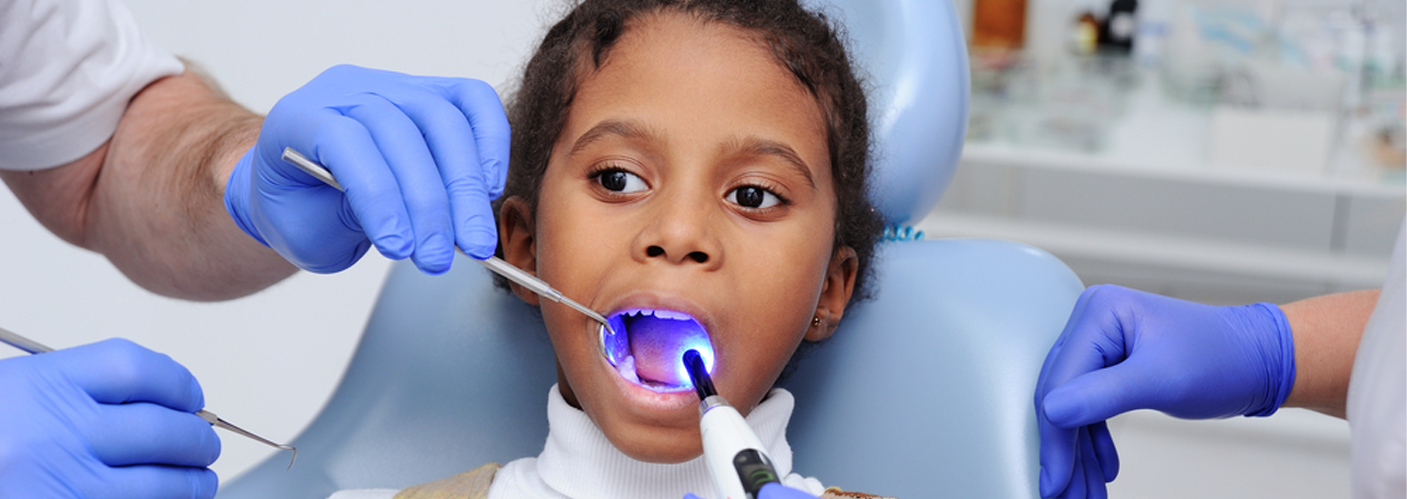
When it’s time to find a dentist for your child, you face a choice most parents don’t think much about: should you take your child to a pediatric dentist or just add them to your family dentist’s patient list?
It seems like a simple question. But the answer matters more than most people realize — especially in the early years when your child is forming their lifelong relationship with dental care.
Here’s a straightforward breakdown of the differences, and what they mean for your child.
The Training Difference
This is the biggest distinction between the two — and it’s significant.
Both family dentists and pediatric dentists complete four years of dental school. But after that, their paths diverge:
- Family dentists enter practice after dental school, treating patients of all ages with general training.
- Pediatric dentists complete an additional 2-3 years of specialty residency training focused exclusively on children — from infants through teenagers.
That extra training covers areas that make a real difference for young patients:
- Child development and psychology
- Behavior management techniques for anxious or uncooperative children
- Child-specific dental procedures and growth patterns
- Special needs dentistry
- Pharmacology and sedation safety for children
- Managing dental trauma in children
Dr. O at Children’s Dentistry of Arlington completed his pediatric dental residency after dental school — and continues updating his training every year to stay current with the latest innovations in pediatric care.
The Environment Difference
Walk into a family dental practice and you’ll typically see a waiting room designed for adults, dental equipment sized for adult mouths, and a team accustomed to treating patients who understand what’s happening and can communicate clearly.
A pediatric dental office is designed from the ground up with children in mind:
- Waiting areas with kid-friendly features that reduce anxiety before the appointment even starts
- Smaller instruments designed for smaller mouths
- A team trained specifically in child communication and comfort
- An atmosphere calibrated to make children feel safe rather than intimidated
These differences aren’t cosmetic. The environment plays a significant role in how a child experiences the dentist — and those early experiences shape their relationship with dental care for decades.
The Communication Difference
Explaining a dental procedure to a 4-year-old is completely different from explaining it to a 40-year-old. Pediatric dentists are trained in what’s called “tell-show-do” — a technique where every step is explained in child-friendly language, demonstrated, and then performed. Children know exactly what to expect before it happens, which dramatically reduces fear and resistance.
Pediatric dentists also know how to read children’s behavioral cues, manage anxiety without forcing compliance, and adjust their approach based on a child’s age, temperament, and developmental stage.
This is a skill set that takes years to develop — and it makes a profound difference in how children experience dental care.
The Developmental Knowledge Difference
Children’s teeth, jaws, and oral development follow specific patterns and timelines. Pediatric dentists are trained to:
- Recognize when development is on track and when it isn’t
- Identify early orthodontic concerns that benefit from intervention
- Understand how habits like thumb sucking or pacifier use affect developing teeth
- Monitor the transition from baby teeth to permanent teeth
- Detect early signs of conditions that affect children specifically
A family dentist may catch many of these issues — but a pediatric dentist is specifically trained to look for them at every stage of development.
So When Does It Actually Matter?
For older teenagers and adults, a family dentist is often perfectly appropriate. But for children — especially young children, anxious children, or children with special needs — the specialized training and environment of a pediatric dentist makes a measurable difference in outcomes and experience.
The American Academy of Pediatric Dentistry, the American Dental Association, and most major pediatric health organizations recommend that children see a pediatric dentist from their first visit through at least age 12 — and often through their teenage years.
What About Cost?
Pediatric dental care is typically covered by the same insurance plans and Medicaid that cover family dental care. The cost to parents is usually the same — the difference is in the quality and specialization of the care your child receives.
At Children’s Dentistry of Arlington, we accept most insurance plans and Medicaid, and our team will verify your coverage before any appointment.
A Note on In-House Orthodontics
One more advantage of choosing the right pediatric dental practice: some — like Children’s Dentistry of Arlington — also have an orthodontist on staff. That means your child can receive both pediatric dental care and orthodontic treatment (braces, clear aligners, retainers) in the same place, with a team that already knows them.
Dr. Maya Oliver, our in-house orthodontist, works alongside Dr. O to provide seamlessly coordinated care — no referrals, no starting over with a new office, no juggling two separate practices.
The Bottom Line
Could your child get adequate dental care from a family dentist? Possibly. But a pediatric dentist brings specialized training, a child-focused environment, and expertise in child development that a general practice simply can’t match.
When it comes to your child’s health, specialized care matters. The same reason you’d take your child to a pediatrician rather than a general practitioner applies to dentistry too.
→ Meet Dr. O — Board-Certified Pediatric Dentist
→ Learn about our in-house orthodontics with Dr. Oliver
→ Book your child’s first visit at Children’s Dentistry of Arlington