If your child’s dentist has recommended dental sealants, your first question is probably the same one most parents ask: are dental sealants kids safe?
It’s a completely reasonable question. You want to protect your child’s teeth — but you also want to know exactly what’s going into their mouth. Here’s a straightforward, honest answer from Dr. O at Children’s Dentistry of Arlington.
What Are Dental Sealants?
Dental sealants are thin, protective coatings painted onto the chewing surfaces of your child’s back teeth — the molars and premolars where most cavities in children occur.
The back teeth have deep grooves and pits that are nearly impossible to clean completely, even with excellent brushing. Food and bacteria get trapped in these tiny crevices and cause decay over time. Sealants fill in those grooves and create a smooth surface that’s much easier to clean.
The procedure takes just a few minutes per tooth, is completely painless, and requires no drilling or anesthesia.
Are Dental Sealants Safe?
Yes — dental sealants are safe. They have been used in pediatric dentistry for over 40 years and are recommended by:
- The American Dental Association (ADA)
- The American Academy of Pediatric Dentistry (AAPD)
- The Centers for Disease Control and Prevention (CDC)
- The World Health Organization (WHO)
The scientific evidence for their safety and effectiveness is among the strongest in all of preventive dentistry.
What About BPA? Is That a Concern?
This is the question parents ask most often — and it deserves a direct answer.
Some dental sealants contain trace amounts of BPA (bisphenol A), a chemical that has raised health concerns in certain contexts. However, the amount present in dental sealants is extremely small — far below any level considered harmful.
To put it in perspective: the amount of BPA exposure from a dental sealant is significantly less than what children encounter daily from food containers, receipts, and everyday plastics. Studies have found that BPA exposure from sealants is detectable for only a few hours after application and returns to baseline levels quickly.
The CDC, ADA, and AAPD have all reviewed the evidence and concluded that the protective benefit of sealants far outweighs any theoretical concern about trace BPA exposure.
At Children’s Dentistry of Arlington, Dr. O uses BPA-free sealant materials whenever possible and is happy to discuss specific product options with you at your appointment.
How Effective Are Dental Sealants?
Very. The numbers are compelling:
- Sealants can prevent up to 80% of cavities in the back teeth
- Nine out of 10 cavities in children occur in the back teeth — exactly where sealants are applied
- The CDC reports that school-age children without sealants have almost 3 times more cavities than children with sealants
- Sealants can last up to 10 years with proper care
Preventing a cavity now is far less expensive — and far less stressful for your child — than filling one later.
At What Age Should My Child Get Sealants?
The best time to apply sealants is shortly after the permanent molars come in:
- First permanent molars usually appear around age 6
- Second permanent molars usually appear around age 12
Sealing these teeth shortly after they erupt gives them protection before decay has any chance to develop. Dr. O will let you know when your child’s teeth are ready during their regular checkup — you don’t need to schedule a separate appointment.
What Does the Sealant Process Feel Like?
Most children are surprised by how easy it is. Here’s what happens:
- The teeth are thoroughly cleaned
- Each tooth is dried and a mild gel is applied briefly to help the sealant bond
- The gel is rinsed off and the tooth is dried again
- The liquid sealant is painted onto the tooth’s chewing surface
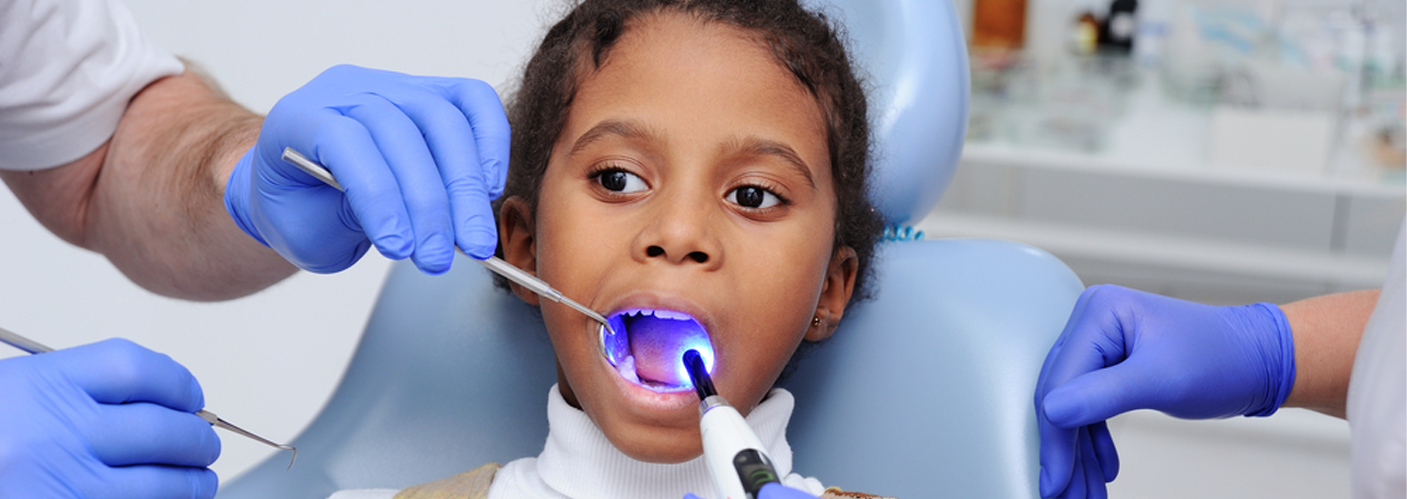
- A small curing light hardens the sealant in just a few seconds
No drilling. No needles. No discomfort. Your child can eat and drink normally right after the appointment.
Do Sealants Replace Brushing and Flossing?
No — sealants protect the chewing surfaces of back teeth, but they don’t cover the sides or spaces between teeth. Regular brushing, flossing, and dental checkups are still essential. Think of sealants as an added layer of protection, not a replacement for good oral hygiene at home.
Does Insurance Cover Dental Sealants?
Most dental insurance plans cover sealants for children, typically up to age 14 and twice per year. Medicaid also covers dental sealants for eligible children.
Our team at Children’s Dentistry of Arlington will verify your child’s coverage before the appointment so there are no surprises. Call us at (703) 634-9450 with any questions about coverage.
The Bottom Line
Dental sealants are one of the safest, most effective preventive treatments available for children. Decades of research and endorsement from every major dental and public health organization back this up.
The trace BPA concern, while understandable, is not supported by the scientific evidence as a meaningful health risk — especially compared to the very real damage that untreated cavities can cause.
If you have questions about whether sealants are right for your child, Dr. O is always happy to discuss them with you at your next visit. We believe in informed parents and transparent conversations.
→ Learn more about dental sealants at Children’s Dentistry of Arlington